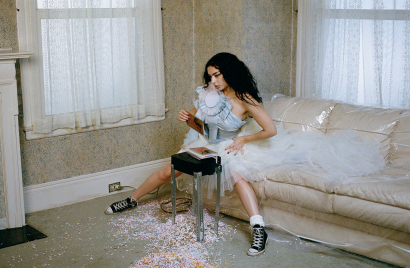
From Britney Spears to Yevgeny Zamyatin, the senior strategist at MOX on the artists, art and her other daily-must-have’s, as part of LBB’s Essential List series
Yraiz Lougheide-Camejo is a third culture kid turned creative strategist, with a passion for transforming cultural thinking into narratives and stories that create meaning and propel change. She is currently working as a senior strategist at MOX. Yra sat down with LBB to discuss Park Chan-wook’s latest masterpiece ‘No Other Choice’, the iconic looks of ‘Industry’ star Harper Stern and how clubbing can be creatively inspiring.
Place of birth: Seattle, Washington
Hometown: Gothenburg, Sweden
Staycation: London Fields (North side)
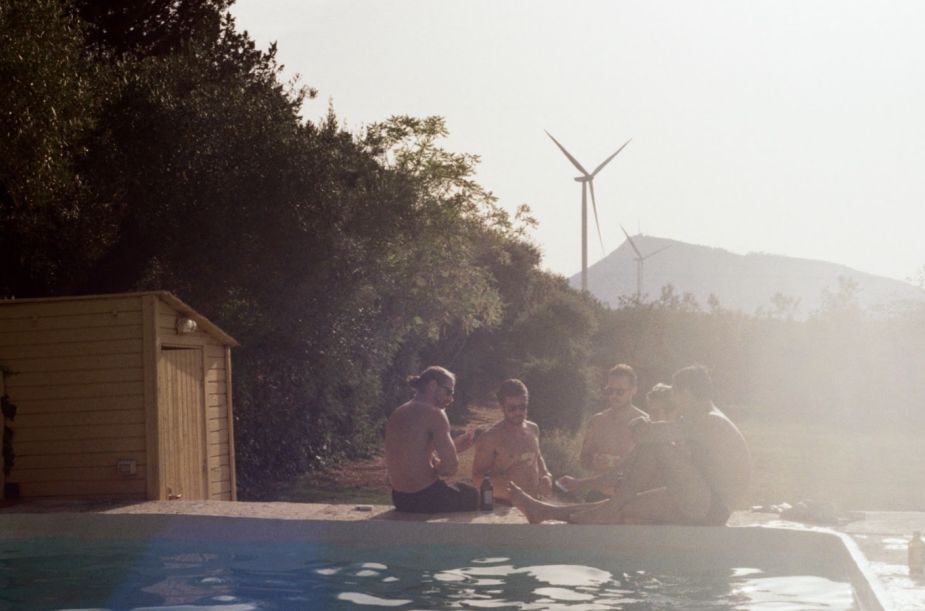
Vacation: Anywhere in Italy. I went to Sicily with a group of friends last year and that was pretty magical.

Place of work: MOX HQ
Place of workout: Psycle Shoreditch – the cult rumours are true but cults are famously a great time so what’s not to love?
Good Habit: Weekly run
Bad Habit: Running late
Mode of transport: Lime bike
Bonus Travel Essential: Wired headphones in case my Bluetooth ones run out of battery (stay ready, so you don’t have to get ready).

Culture
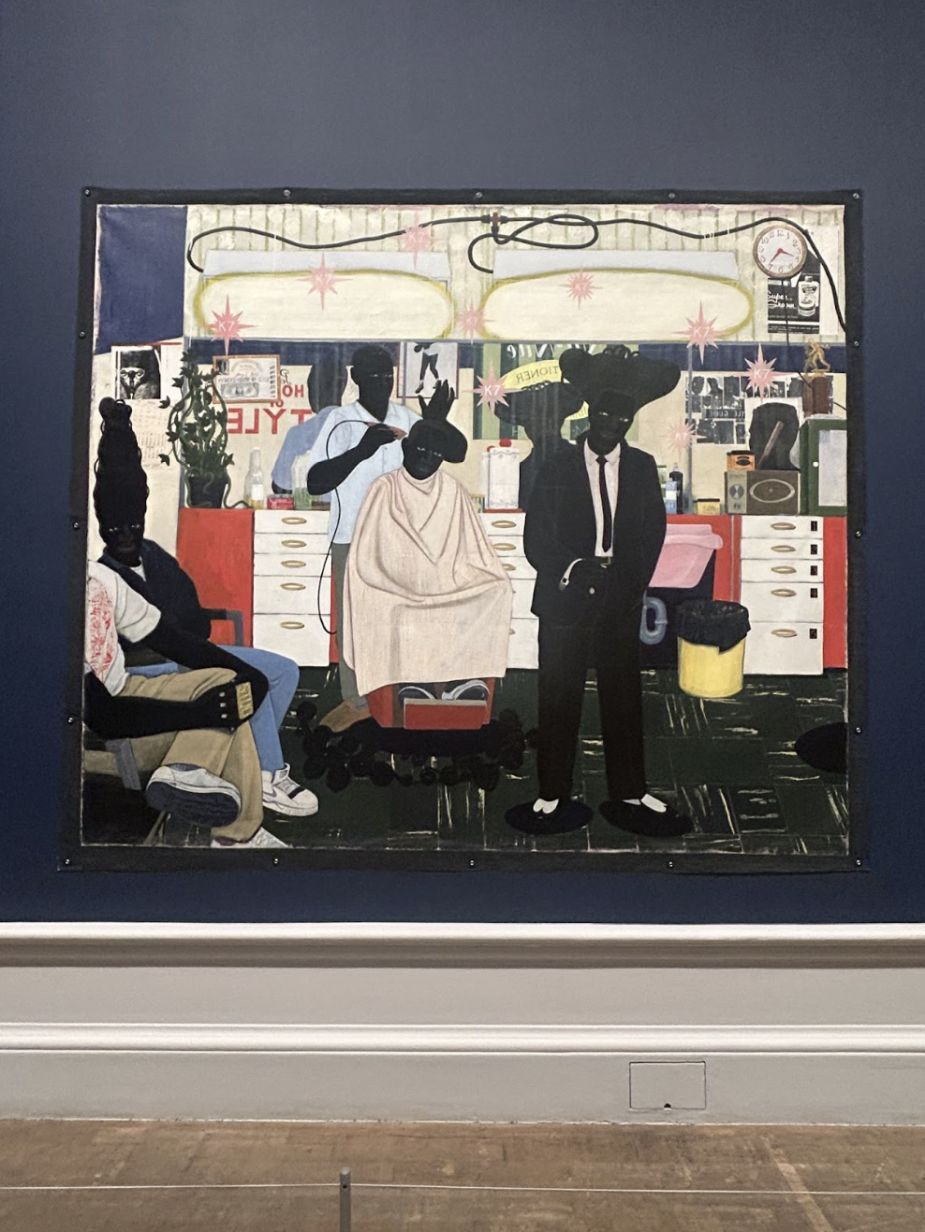
Artist: Kerry James Marshall. I saw him at the Royal Academy last year and fell in love. He transforms seemingly ordinary places like the barber shop or the club into these rich, magical dreamscapes. The scale of this one is amazing and I love his use of colour here.
Musician: Rosalía
Film director: Ryan Coogler
Author: Yevgeny Zamyatin – author of my favourite book of all time ‘We’, which heavily inspired George Orwell’s ‘1984’
Photographer: Renell Medrano
Film: ‘No Other Choice’ – an absolute masterpiece. The cinematography and score are equal parts menacing and beautiful (a balance I aspire to).
Series: ‘Industry’! The looks, the drama, the poetically diabolical insults. I still don’t know what a short is, but I do know that Harper Stern dresses how I would want to dress if I was evil.
Invention: Pick and drop braids or the flip over weave. The innovation happening in the Black hair space continues to astound me.
Music Video: ‘Toxic’– Britney Spears
Board Game: ‘Articulate’ – the object of the game is to explain a word to your teammate without saying the word itself in a limited amount of time. I think everyone should play it at least once to really understand the inner workings of the people around you. For example, a friend once used ‘a really famous book’ to describe The Bible. We lost the round.
Book: ‘Poetic of Relations’ by Eduardo Glissant
Graphic Novel: ‘On Palestine’ by Joe Sacco
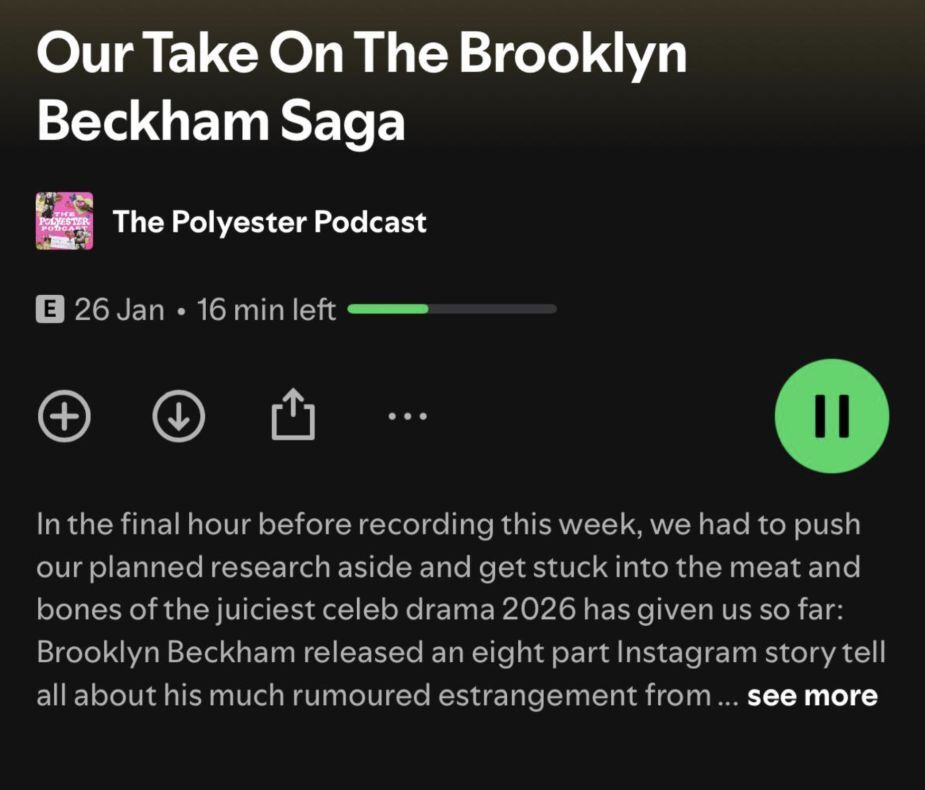
Podcast: ‘Polyester Pod’ for culture, ‘The News Agents’ for politics, ‘The Read’ for vibes
Newspaper (off or online): ‘The Guardian’
Magazine: ‘Native Magazine’ or ‘Apartmento’
Obsession: Wikipedia pages, the more innocuous the better. My current favs are ‘Mar-a-lago face’ and the ‘Hackney Siege of 2002’
Bonus Culture Essential: Going to the club. Best place for both style and music inspo and I genuinely believe dancing in a room with your friends is as close to free therapy as we’re gonna get.
Food and Drink
Breakfast: Thoughts and prayers mostly, but occasional overnight oats if I’m feeling fancy
Restaurant: Mangal or Cafe Kowloon
Cheap bite: Lamb patty from Rainbow Bakery on Kingsland road
Working lunch: Salad Kitchen Crunch Box w/ Lemon pesto – extra saucy is a must
Dish: Pad Thai
Snack: Oatmeal raisin cookie
Guilty Pleasure: Matcha Blondie from Violet
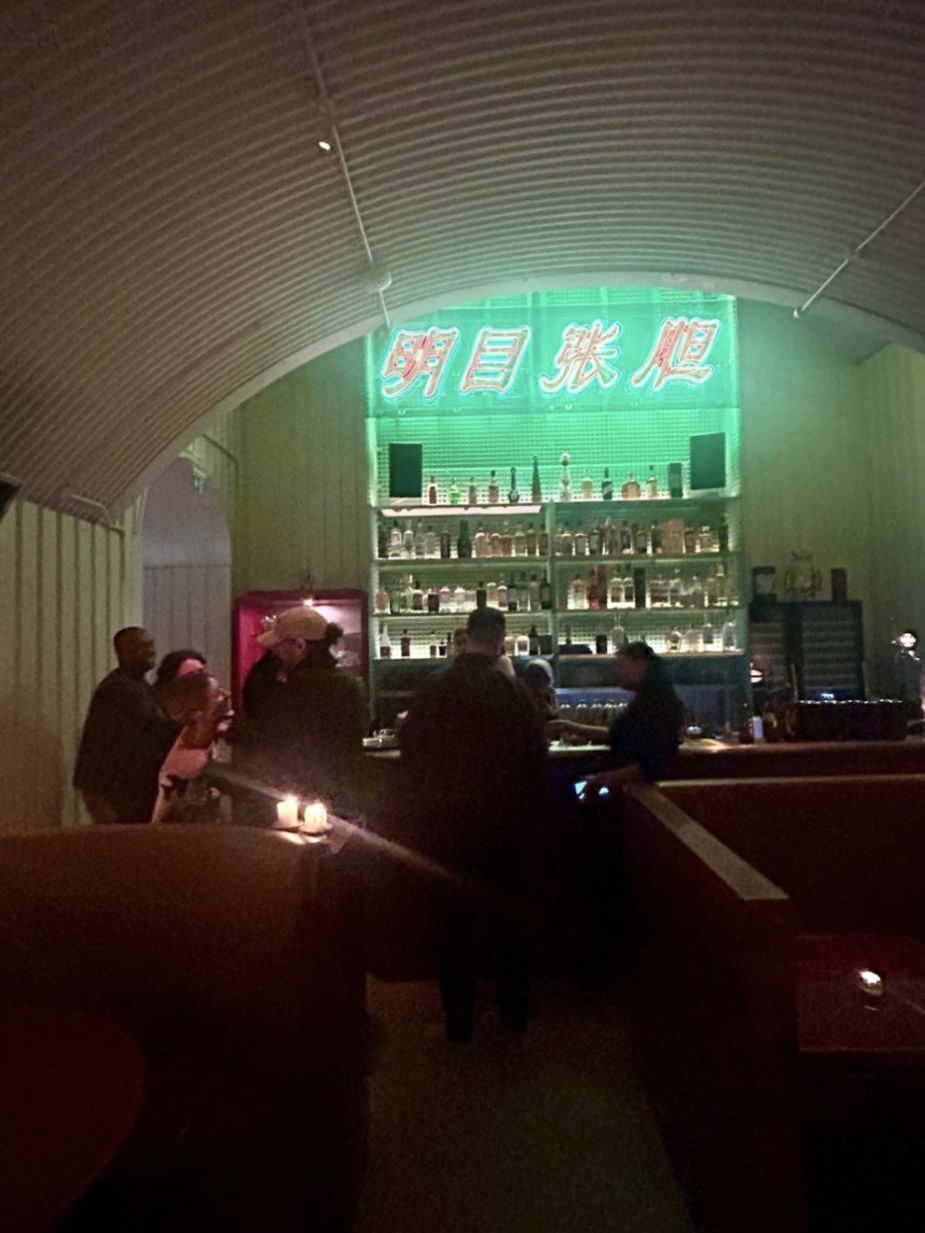
Bar: Rasputin
Booze: I love a vesper martini but a pint generally hits the spot
Not Booze: An arnold palmer
Bonus Food: Doubles IYKYK
Bonus Beverage: Oat flat white
MOX’s New York office will be fronted by seasoned producer Francesca Berchelli-Jones as head of production.
Creative Practice MOX today announces that it is expanding its presence into the US. Established in London in 2017 by Matt Bolton, Oscar Eavis and Xander Pietrovito, the agency has flourished within the European market since its inception, and is continuing on its exciting trajectory of growth with a renewed and greater focus on global and North America. The announcement comes with the arrival of New York based Francesca Berchielli-Jones as head of production; previously senior creative producer at Lola, and having spent three years at Shoot Europe with a focus on the Nike account, Frankie joins MOX to support the company’s growth in the region and head-up the new office based in New York, backed by MOX’s headquarters in London. Francesca Berchielli-Jones, head of production, MOX said, “I love everything MOX stands for so I’m very happy to be part of the team and thrilled to be spearheading the US expansion. It’s a really exciting time for the business and I think our hybrid approach to creative and production services is a refreshing and innovative way of working. I’m looking forward to introducing this model to a US audience and delivering an efficient and versatile offering in this saturated industry, all with a unique British touch!”

“It’s a really exciting time for the business and I think our hybrid approach to creative and production services is a refreshing and innovative way of working.”Francesca Berchielli-Jones, head of production, MOX
MOX operates using a hybrid approach, bringing creative studio and production house together under one roof; an efficient and effective and flexible model that allows MOX to own the entirety of the creative process and push it further. Replicating this approach in the US, MOX is able to provide dynamic creative responses and production plans at pace to the US and global markets. A bolstered presence within the US will allow MOX to continue its working relationship with existing client, Nike Global. Most recently, MOX collaborated with Nike Global in Portland on the Spring ‘24 ‘Always On’ campaign, conceptualising, developing and producing stills and video to highlight the Spring 2024 core range across Nike estate. Looking to the future, MOX will look to expand their client base within New York and in the US as a whole, executing creative campaigns that help to change brand perception, target new audiences and cut through the noise within crowded markets. Steven Collings, managing director, MOX commented, “With so much of our creative and production work already happening with a global mindset, it felt like the natural next step to put a stake in the ground and open our doors in New York City, catering to global brands who have a desire to create culture defining work.”
MOX’s head of production and senior producer on supporting the industry’s next generation and evolving approaches to sustainability, workflows, and creative problem-solving.
Francesca Berchielli-Jones is head of production at MOX, in LA and working with our London and New York offices to bring MOX creative to life in the best way possible.
With over 10 years experience in the industry, producing stills and moving image for fashion, editorial and advertising clients across UK and Europe, North and Central America and Asia, Frankie is now building the in-house production model at MOX to support the agency’s hybrid approach to content creation.
Amanda Wilmer is senior producer at MOX, based in London working alongside Frankie to deliver all the production requirements for the business and develop our in-house production model.
Working in the industry for over 15 years, Amanda has produced everything from editorial to multi media 360 global campaigns.
LBB: What advice would you give to any aspiring producers or content creators hoping to make the jump into production?
Francesca: Experience is key so take any assisting, interning, running/PA jobs. It all helps. Work experience in any department is valuable as it’s important to have an overarching understanding of the shoot and what all departments need. Anticipating what support crew might need is what makes you a good producer.
Getting to know your industry as a whole as well as your peers on set is really important, as you never know when you’ll run into someone again and how they might be able to help you. It’s also crucial to have good knowledge of young and developing creative partners and wider industry contacts so you can support your creative team as much as possible.
Amanda: Do it! Frankie has nailed it but there are a lot of transferable skills that you probably already have. Try to get your foot in the door with assisting jobs, use that as an opportunity to talk and connect with others in the industry. Be open and available. Unfortunately, producers are normally first in and last out on shoot days so be prepared!
LBB: What skills or emerging areas would you advise aspiring producers to learn about and educate themselves about?
Amanda: I think it’s valuable to understand the language, timings and possibilities around AI. This is inevitably going to be a big part of the industry and to arm yourself with the tools and knowledge of this skillset will be invaluable.
Likewise with any visuals that include VFX and CGI, gaining the knowledge and vocabulary around how it works and what is needed puts you in a stronger position when working with budgets and timings.
Francesca: I completely agree with Amanda. We have seen a huge shift towards working with new technologies and embracing AI so instead of shying away from the unknown, be curious, ask questions, educate yourself.
LBB: What was the biggest lesson you learned when you were starting out in production – and why has that stayed with you?
Francesca: Always ask questions – never assume.
Take time to meet everyone on set and understand what they do. Relationship building is such an important part of a producer’s job, the connections you make with people help to develop your skills and create empathic productions finetuned to suit the creative, the client and the crew.
Amanda: That there’s always a way. Inevitably you will be put in positions where there is not enough time or budget. As Frankie mentioned, having good relationships helps you to work with teams to find a compromise or solution. Being solution focused will be received far better than a ‘no’ person and at these points a calm considered producer is what is needed.
We work as a fluid team with little attachment to hierarchy which really helps with welcoming in those who don’t traditionally perceive themselves as ‘right’ for production or agency work. We like to cultivate a safe working environment that fosters people’s ability to learn and develop their skills.
Most importantly, we try to be vocal about the need for more inclusive working practices as we believe amplifying the conversation will encourage our peers to prioritise this too.
Amanda: As a team we make a conscious effort to bring people on board from diverse backgrounds that have an interest in stepping into this space. This could be through a day shadowing on set, to a much longer period of time as a production assistant being across the pre and post production process as well.
It’s important to highlight that offering a diverse and inclusive team is a valuable asset to any business that wants to reach a wide audience. It should be something that companies are actively seeking out to better themselves, not just ticking a box.
LBB: And why is it an important issue for the production community to address?
Francesca: Production ultimately controls who is on set and is responsible for building out the team. By taking our commitment to inclusion seriously, we hope to have a significant impact on heroing minority groups by offering people better opportunities to develop their skills. In the long run, this will help expand our industry and bring fresh perspectives and ideas to our practices.
Amanda: As Frankie says, we can really help control and direct the face of the team behind the lens. It’s our responsibility to give access to the space, exposure and share possible career opportunities that they might not have even realised existed. The more diversity in production, the wider the pool of knowledge and the greater understanding of cultures.
It’s important to highlight that offering a diverse and inclusive team is a valuable asset to any business that wants to reach a wide audience. It should be something that companies are actively seeking out to better themselves, not just ticking a box.
LBB: There are young people getting into production who maybe don’t see the line between professional production and the creator economy, and that may well also be the shape of things to come. What are your thoughts about that? Is there a tension between more formalised production and the ‘creator economy’ or do the two feed into each other?
Francesca: I think there’s benefits to both ways of working and depending on the job, one way might be better suited than the other. Professional or formal production obviously gives you more technical training around budgets, usage and experience with more high profile clients and creative partners and the learnings that come with that.
Creator type producers on the other hand, more often than not have had to figure it out for themselves, learning in a more organic way and using creative problem solving to get things done. They’re usually working with smaller budgets, and less access to teams and vendors so it really can be a lot of trial and error; building experience this way isn’t easy.
The main thing is to be aware of your experience and how you can apply this to the project, and to always be realistic with your skillset – I’ve definitely witnessed the ‘tension’ before and this is when producers overestimate or oversell their abilities. Ultimately you can’t fake it and it can be frustrating for the rest of the team if the expected support isn’t there. The margin between self confidence and over confidence is slim and mid-production isn’t the best place to realise this!
Amanda: I think the creator economy is a fantastic way to step into the space and start to think about the logistics around production. It works really well when considering brand requirements for social content and emerging platforms. It definitely requires out of the box thinking and an agile mindset.
A more formal production role however is normally required when more people are involved in the process, there are larger budgets, and a more demanding creative or trickier post production timeline.
You may be producing a shoot that has 70-100 people on set and delivering a bank of assets in multiple sizes, languages and lengths. Just the people management around a job of that size is a skill on its own! So it’s just understanding how and when content creator production is most suited to a job and when more support is needed.
LBB: If you compare your role to the role of the heads of TV/heads of production/executive producers when you first joined the industry, what do you think are the most striking or interesting changes (and what surprising things have stayed the same?)
Francesca: I think we’re moving away from the old school mentality in a lot of ways which is really exciting. Most heads of department no longer feel the need to treat their assistants how they might have been treated, there is definitely more respect within teams and genuine support and fostering of talent.
I also think since covid in particular, remote working has become a helpful tool in keeping us efficient and ensuring communication is better than ever.
MOX PROD operates globally between LA, NY and London with our EPs working independently, not being limited to one place or space within the industry, but knowing they have the full support of an in-house production team and resources wherever and for whatever they need.
LBB: It seems that there’s an emphasis on speed and volume when it comes to content – but to where is the space for up and coming producers to learn about (and learn to appreciate) craft?
Francesca: Supporting the next generation of producers is really important to MOX which is why we’ve partnered with D&AD for the past few years as part of their SHIFT programme, which educates self-taught creatives entering the advertising, design and creative industries from outside traditional education.
We offer placements to participants so they can get a better understanding of in house experience during their course and look to offer full time positions once they graduate.
We also participate in their mentor program where we support individuals with any specific needs, offer resources and make connections to further their development in the creative industry.
Amanda: Yes as Frankie has mentioned the partnership with D&AD has been a fantastic opportunity to meet and support young creatives who want to work within the space. I still have contact with past participants and one regularly reaches out with questions. It gives you an idea of the kind of bond and access you can give someone.
Personally with regards to educating more established producers, l do not necessarily think a course is necessary. I think to be continuously curious and ask questions can go a long way. Of course understanding and being good at programs that support production (excel etc) can really streamline your workflow and make life easier.
LBB: On the other side of the equation, what’s the key to retaining expertise and helping people who have been working in production for decades to develop new skills?
Amanda: I think for more established producers, it’s less about formal training and more about staying curious and open to new ways of working. The industry is evolving rapidly, not just in terms of technology but also in the way we approach sustainability, workflows, and creative problem-solving. Being adaptable and willing to ask questions is key, doesn’t matter how many years in the industry you have.
For example, sustainability is becoming a major focus in production, and while it might not have been a priority in the past, it’s something experienced producers can lead the charge on. There are many resources (AdGreen being one) that offer practical tools to measure and reduce the carbon footprint of a shoot, but beyond that, it’s about rethinking habits—and continuously evolving, staying connected, and embracing the changes shaping the industry.
LBB: Clearly there is so much change, but what are the personality traits and skills that will always be in demand from producers?
Francesca: A producer’s main focus is to deliver the best quality work possible so I would say creative problem solving is the main skill needed as there will always be curveballs and changes to work through. Finding a way to go the extra mile to give the team what they want is the most rewarding part of the job.
Amanda: I think as a producer you really are the link between the creative vision and the reality. Given the challenges that can bring, l believe you have to be calm and not be the type of person who is overwhelmed easily. Teams will be looking to you for solutions so you’ll need language, empathy and strong negotiation skills!
Vilde Tobiassen, Senior Art Director at MOX, on going against the tide and embracing the feral energy of brat for winter with the ‘night b4 xcxmas’.
The holiday season comes with a lot of expectations. The keeping up of old traditions, of family obligations and there’s also expectations of Christmas Ads. The highly anticipated Christmas ads from the big players like John Lewis, Sainsbury’s and other high street brands fill the screens following a tried and tested and to be honest, a very expected format: the classic tugging at the heartstrings of the viewers. Animals are animated and personified, children are sad, children are happy, magical things swirl through the air, old people are lonely and suddenly the moon can talk! It’s cute, it’s emotional, but to be honest it feels dated and for a different generation. So when Converse came to us with a brief that said ‘fuck the season’, we happily obliged, better yet an opportunity to feature the icon of the year, Charli XCX. We knew that we would be steering far, far away from any traditional and typical Christmas advertising. We spent time deciphering what ‘fuck the season’ meant to us as well as what it would mean to our Gen-Z audience. Brat summer was coming to an end and we were of course highly inspired by the energy that it had brought to the world. We developed a manifesto and strategy on what it means to fuck the season. We all know that the holiday season can be pretty dead. It’s stressful, and there are all the expectations of gift-giving, dinner organising, and shopping. You have to show up looking a certain way to Christmas parties, all put together, it can be tiresome and we go through the same thing every year in an endless loop, most of us maybe wishing it was all over. Whilst it’s not all negative and Christmas can have its lovely moments, our audience wouldn’t live their lives like that during the rest of the year, accepting other people’s traditions and standards. Not very brat at all.
We wanted to explore what would happen if you let the feral energy of brat summer take over and continue into brat winter. Our aim was to create a campaign full of rebellious Christmas spirit, aimed at those who don’t want to conform. Those who embrace living unapologetically, those who embrace both being cute and disgusting, lux and trashy, fierce, being hot, dumb, ironic – all of the things at once or none at all, doing whatever they feel like doing. And who better to front this than Charli XCX herself, the queen and creator of brat.

We wanted to explore what would happen if you let the feral energy of brat summer take over and continue into brat winter.Vilde Tobiassen, Senior Art Director at MOX
With all that in mind, we developed out the overarching idea of ‘night b4 xcxmas’, moving away from the expected actions that would be happening the night before Christmas. We instead explored the rebellious actions that Charli or our audience would be doing the night before xcxmas. When it came to the art direction we wanted to honour the image and aesthetic that Charli has created for herself whilst also pushing the boundaries to create iconic imagery. Using some key filters; unhinged, provocative, fun(ny), real & holiday spirit – the campaign’s visual output embodies these guidelines.
This is the point where the creative was shared with Charli in order to get her green light on the overarching creative and strategy as well as bring in her preferences of creative partners. As a chronically online gen-z creative it was of course an honour to have the work not only seen by but approved by Charli. As we wanted the campaign to be as authentic to Charli as possible, she suggested creative partners which led us to work with photographer and director Sharna Osborne. This was the perfect fit for our campaign, her carefully crafted aesthetic of muted tones, mischievous style and slightly gritty retro, VHS world felt like the perfect visual tool to continue telling the story. Sharna honed in on the actions of the video and we worked closely to develop out the full story. We landed on Charli rebelliously shredding up old Hallmark Christmas cards, as she simply sits on a chair and stares right down the camera. A true fuck you to the holiday season, juxtaposing the retro Christmassy set behind her. We knew that this shouldn’t follow your standard Christmas ad formats, instead, we focused on a short format video accompanied by a curated selection of stills. Perfect for our audience on socials as well as being impactful enough to be shown out of home.
Sharna and I worked closely on developing the art direction and set design, working with the MOX production team in NYC to find a location house that had the right energy and with set designer Milena Gorum to bring it to life. The final outcome included giant pink bows, piles of presents wrapped with images of Charli, shredded Christmas cards and a sea of Converse ready to be gifted. Charli was involved throughout the whole creative process and had oversight of all changes and updates up until the shoot day as well as in post-production. We collaborated with her usual glam and styling team, and we were keen to keep her iconic curly hair and snatched eyes paired with her amazing style. The blend of Charli and Converse felt natural from the beginning, Charli even wore her own pair of chucks on the day of the shoot, which made it extra brat.Looking back on what we created, it was a super exciting, creative process. It was obviously bound to be, with such an incredible brief from Converse, allowing us to tap into our chaotic energy with the trust they gave us, and that spirit carried through into the campaign itself. It was never created to fit into the traditional Christmas ad landscape. By tapping into Charli XCX’s mischievous, daring and bratty energy and pairing that with Converse’s rebellious brand energy we aimed to create something that felt authentic and playful. Collaborating with amazing creatives who made the shoot happen in less than 2 weeks felt very brat. Hopefully, the campaign serves as a reminder that the holiday season can look like whatever you want it to look like.